Financial highlights
Last trade 48.15€
Variation +1.87%
15/10/2026 - 05:36 PM
data source: Investis Digital
Financial highlights
Last trade 48.15€
Variation +1.87%
15/10/2026 - 05:36 PM
data source: Investis Digital

One of the most powerful
operational hyperspectral instruments in the world on board the ASI PRISMA satellite
Aeolus
is equipped with the first laser transmitter to operate in the ultraviolet range
Lightning Imager
an instrument capable of detecting lightning at an altitude of 36,000 km, on board the third-generation Meteosat satellite
Floris
a spectrometer that will detect and analyse plant fluorescence from an altitude of about 800 km
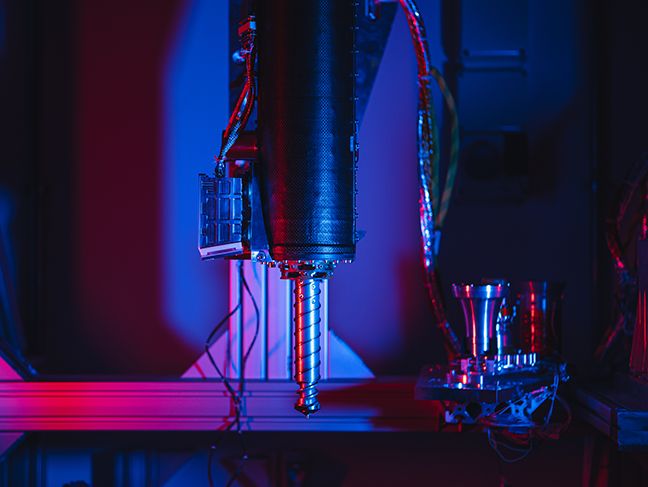
The ExoMars drill
will penetrate the soil of Mars to a depth of 2 metres in search of traces of life, past or present
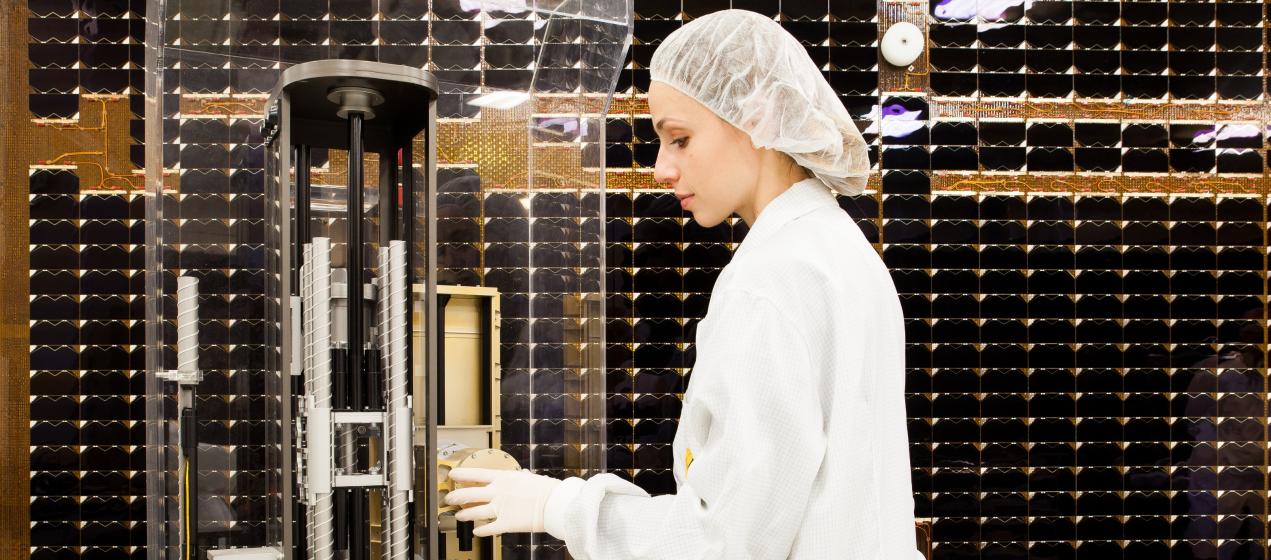
Space robotics systems and mechanisms, particularly arms and drills, with electronics and control software capable of drilling into soil and collecting samples for analysis using integrated laboratories.
Tools for the observation and study of meteorological and climate phenomena on Earth, in our solar system and in deep space, capable of operating in a variety of optical bands, from ultraviolet to infrared (vision cameras, spectrometers – including hyperspectral ones – and radiometers).
Laser transmitters and LIDAR instruments operating in the ultraviolet range, enabling acquisition and transmission of essential data to improve short-term and medium-term meteorological models, as well as the study of climate change.
Filter products